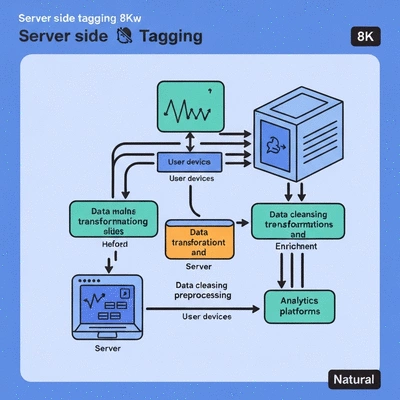
In today's fast-paced digital landscape, understanding the nuances of analytics can set your business apart. What if a shift in how you collect and process data could provide better insights and improve your overall decision-making? This is where server-side tagging comes into play, revolutionizing how organizations approach analytics.
What You Will Learn
Server-side tagging enhances data accuracy by reducing errors associated with client-side methods.
This approach prioritizes user privacy, aiding compliance with modern data regulations like GDPR.
By optimizing performance, server-side tagging can significantly improve website speed and user engagement.
It provides a robust solution against ad-blockers, ensuring consistent data collection.
With server-side tagging, businesses can improve their cookie management processes, enhancing compliance and building user trust.
Server-Side vs. Client-Side Tagging: A Comparative Overview
The following visual outlines the key differences and benefits of server-side tagging compared to traditional client-side methods, highlighting its impact on data accuracy, privacy, and performance. For a deeper dive into measuring what truly matters, consider exploring how to align website KPIs with goals.
Server-Side Tagging: Core Benefits
Improved Accuracy
Significantly reduces tracking errors for more reliable data.
Enhanced Privacy
Aids GDPR compliance by limiting sensitive data exposure.
Performance Optimization
Shifts processing to server, improving load times and UX.
Ad-Blocker Resistance
Ensures consistent data collection even with ad-blockers.
Client-Side Tagging: Challenges
Browser Interference
Data collection interrupted by browser settings or extensions.
Performance Impact
Can increase page load times and degrade user experience.
Ad-Blocker Vulnerability
Tracking scripts easily blocked, leading to data loss.
Decentralized Data
Data processing across various client browsers, less consistent.
Understanding Server-Side Tagging: A Simple Definition
In the world of digital analytics, server-side tagging is an essential concept that organizations need to grasp. But what exactly does it mean? Simply put, server-side tagging refers to the process of managing and processing tracking tags on the server rather than the user's browser. This method significantly enhances the efficiency and reliability of data collection, making it a game-changer for businesses striving to optimize their analytics strategies.
Unlike client-side tagging, where data is captured in the user's browser, server-side tagging centralizes data handling on your servers. This shift not only improves performance but also minimizes the impact of ad-blockers and browser restrictions. At Analytics Ltd, we understand the importance of these distinctions, as they can directly affect how effectively you capture user interactions and gain insights into user behavior.
What is Server-Side Tagging and How Does it Differ from Client-Side Tagging?
To truly appreciate the benefits of server-side tagging, it's crucial to understand how it differs from client-side tagging. In client-side tagging, scripts run in the user's browser, meaning that data collection can be interrupted by browser settings, extensions, or even network issues. In contrast, server-side tagging processes these requests on your server, providing a more consistent and robust analytics framework.
Client-Side Tagging: Data is processed in the user's browser.
Server-Side Tagging: Data is processed on the server, ensuring more reliable tracking.
Performance Impact: Server-side tagging reduces load times and improves user experience.
By leveraging server-side tagging, businesses can enhance their analytics capabilities and gain a clearer picture of user behavior, leading to more informed decision-making, similar to how understanding advanced analytics can guide leadership decisions.
The Importance of Reliable Analytics Tracking in Today’s Digital Landscape
In today's data-driven world, reliable analytics tracking is paramount for all businesses. Without accurate data, decision-makers struggle to understand their customers and make informed choices that drive growth. Server-side tagging plays a vital role in this landscape by ensuring that the data collected is trustworthy and comprehensive. As an analytics organization, we emphasize that clarity and precision in analytics can significantly impact your bottom line.
Improves decision-making through accurate data.
Enhances customer understanding and personalization.
Supports compliance with data privacy regulations.
At Analytics Ltd, we help businesses transform their data into actionable insights, and understanding reliable tracking is the first step in this journey. By adopting server-side tagging, you can ensure that the data driving your strategies is both accurate and actionable.
Exploring the Role of the Data Layer in Server-Side Tagging
The data layer is another critical component of server-side tagging. It serves as a structured repository that holds all the information your tags need to function correctly. By creating a robust data layer, you ensure that your analytics setup captures vital data in a consistent manner. This not only streamlines your tracking efforts but also enhances data accuracy.
Centralized Data Management: The data layer allows you to manage data uniformly across various tags.
Flexibility: It provides the ability to adapt and modify data points as needs evolve.
Consistency: Ensures that the same data is used across different tags and platforms.
Incorporating a well-structured data layer is essential for maximizing the benefits of server-side tagging. It empowers businesses like yours to harness the full potential of their analytics, leading to greater insights and improved decision-making capabilities.
Pro Tip
To maximize the benefits of server-side tagging, consider implementing a robust data layer. A well-structured data layer not only centralizes data management but also ensures consistency across various tags, ultimately leading to more reliable analytics. This can significantly enhance your decision-making capabilities and improve your overall analytics strategy.
Frequently Asked Questions about Server-Side Tagging
Server-side tagging is a method of managing and processing tracking tags on a server rather than directly in the user's browser. This centralizes data handling, leading to improved accuracy, performance, and privacy.
By processing tags on the server, server-side tagging significantly reduces the chance of tracking errors caused by browser settings, ad-blockers, or network issues, resulting in more reliable data collection.
Server-side tagging aids in GDPR compliance and other privacy regulations by limiting the exposure of sensitive user data directly to third-party scripts in the browser. It allows for greater control over what data is collected and how it is shared.
It optimizes performance by shifting the processing burden of tracking scripts from the user's browser to the server. This can lead to faster page load times and a better overall user experience.
The data layer acts as a structured repository for all the information your tags need. A robust data layer ensures consistent and accurate data capture across various tags and platforms, streamlining your analytics efforts.
Summarizing the Value of Server-Side Tagging for Reliable Analytics
As we wrap up our exploration of server-side tagging, it's crucial to reflect on the immense value it brings to your analytics strategy. Transitioning to server-side tagging not only offers enhanced data accuracy but also addresses privacy concerns and boosts performance. Let's break down the core benefits that make this approach worthwhile.
Improved Accuracy: Server-side tagging significantly reduces errors in tracking, providing you with more reliable data.
Enhanced Privacy: It helps you comply with privacy regulations, such as GDPR, by limiting the exposure of sensitive user data.
Performance Optimization: By shifting processing from the client's browser to the server, you can improve load times, enhancing user experience.
Ad-Blocker Resistance: This method ensures that your data collection remains consistent, even in environments where ad-blockers are prevalent.
Better Cookie Management: Server-side tagging offers sophisticated methods for managing cookies, which is essential in today’s privacy-focused landscape.
With these factors in mind, it’s clear that server-side tagging can greatly enhance the reliability of your analytics. By adopting this methodology, businesses like Analytics Ltd empower themselves to make data-driven decisions that are not only informed but also grounded in privacy and performance.
Key Takeaways: Why You Should Consider Implementing Server-Side Tagging
As we delve deeper into the topic of server-side tagging, here are some key takeaways that highlight its importance:
Server-side tagging leads to more accurate data collection, reducing the risk of errors that often plague traditional client-side methods.
This approach prioritizes user privacy, helping businesses navigate the complexities of modern data regulations.
By optimizing performance, server-side tagging can enhance overall website speed, improving user engagement.
It provides a robust solution to combat ad-blocker challenges, ensuring your analytics remain intact.
Businesses can refine their cookie management processes, enhancing compliance and user trust.
In short, implementing server-side tagging can significantly improve your data strategy and ultimately contribute to better business outcomes. Embracing these insights positions your organization for success in a data-driven world!
Next Steps: How to Get Started with Your Server-Side Tagging Journey
Ready to take the plunge into the world of server-side tagging? It's an exciting journey that can yield transformative results for your analytics capabilities. Here’s how you can get started:
Educate Yourself: Explore resources, webinars, and online courses that focus on server-side tagging and its implementation.
Gather Your Team: Involve key stakeholders in discussions about the transition to ensure everyone understands the benefits and processes involved.
Plan Your Implementation: Develop a strategy for how you will transition to server-side tagging, taking into account your current systems and resources.
Consult Experts: Consider reaching out to firms like Analytics Ltd for tailored consultation and support during your implementation phase.
The journey may seem complex, but with the right resources and support, server-side tagging can greatly enhance your analytics setup, much like understanding data engineering basics can streamline data infrastructure.
Resources for Further Learning and Implementation Support
To aid your journey, here are some excellent resources for further learning:
These resources will offer you the knowledge and confidence needed to effectively implement server-side tagging.
Encouraging Engagement: Share Your Experiences with Server-Side Tagging
Now that you’ve gathered insights into server-side tagging, I'd love to hear from you! Have you implemented server-side tagging in your analytics setup? What challenges did you face, and what successes have you experienced? Please share your thoughts and experiences below, as engaging with one another enriches our collective understanding and drives innovation forward!
At Analytics Ltd, we believe in the power of community and shared knowledge. Let’s grow together in this exciting digital landscape!
Recap of Key Points
Here is a quick recap of the important points discussed in the article:
Server-Side Tagging: Centralizes data processing on your server, leading to more reliable tracking compared to client-side methods.
Enhanced Analytics: Provides improved data accuracy, minimizes the impact of ad-blockers, and optimizes performance by reducing load times.
Data Layer Importance: A structured data layer is essential for capturing vital data consistently and enhances overall tracking efficiency.
User Privacy: Helps businesses comply with data privacy regulations and limits exposure of sensitive user information.
Implementation Steps: Educate your team, plan your transition strategy, and consider consulting experts for a smooth implementation process.
Your go-to resource for transforming raw digital traffic into actionable business intelligence. We help enterprises with data engineering, advanced analytics, and continuous optimization.
Trusted by product managers, marketers, and executives, our mission is to provide reliable, easy-to-follow insights backed by technical precision and strategic consultation.